Affichage des articles dont le libellé est aikido. Afficher tous les articles

mardi 20 décembre 2022

Tai Chi et Chi Gong

Ces deux disciplines ont leur origine en Chine.
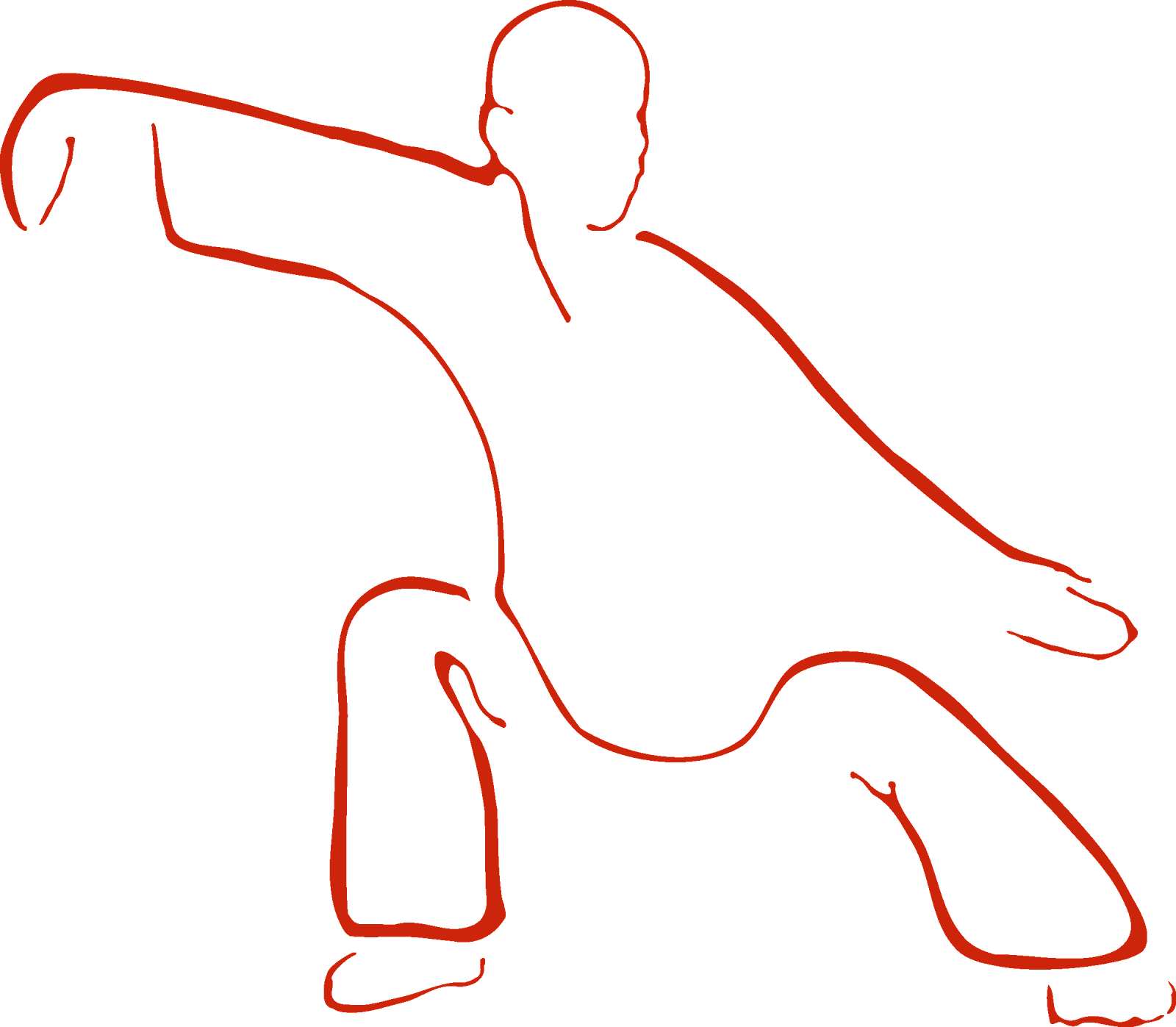


CHI, TAI et GONG


CHI ou QI

Chi et Qi sont deux manieres differentes d’ecrire le terme que l’on traduit generalement par le terme “Energie” en francais. 


TAI

Le terme « Tai » signifie « Grand » on le retrouve dans le terme Typhon (Taifoon) : ouragan.


GONG ou KUNG

Le Terme “Gong” de Chi Gong est parfois transcrit “Kung” comme dans “Kung fu”. On peut le traduire en français par « Pratique », « Exercice » ou « Technique ».


TAI CHI

Tai Chi peut donc se traduire comme « Grande Energie »

Le Tai Chi utilise des mouvements amples et lents pour tonifier l'énergie interne et la faire circuler efficacement dans tout le corps. Généralement, ces mouvements sont des mouvements d’arts martiaux.


CHI GONG

Chi Gong, (également ecrit Qi Gong, Chi Kung, Qi Kung) peut se traduire en francais par « exercice énergétique » ou « techniques énergétiques ». C’est un ensemble de pratiques qui consistent a tonifier et a faire circuler l'énergie interne du corps. Ces pratiques incluent des

enchainements de mouvements, des étirements, des exercices respiratoires.

On pourrait a l’extreme considérer tout exercice pratiqué dans le but d'améliorer métabolisme et santé comme un Chi Gong.

En pratique, le terme Chi Gong est réservé a des pratiques basées sur les théories de la médecine traditionnelle chinoise.


Le Tai Chi est donc une forme de Chi Gong

Tai Chi et Chi Gong ont le même but : harmoniser notre métabolisme pour optimiser la création d'énergie (a partir des aliments que nous mangeons et de l’air que nous respirons) et améliorer la circulation ce cette énergie dans le corps.

Cependant, le Tai Chi se limite a utiliser des mouvements d’Arts Martiaux, sans utiliser d’autres techniques développées par le Chi Gong.


NOTES :

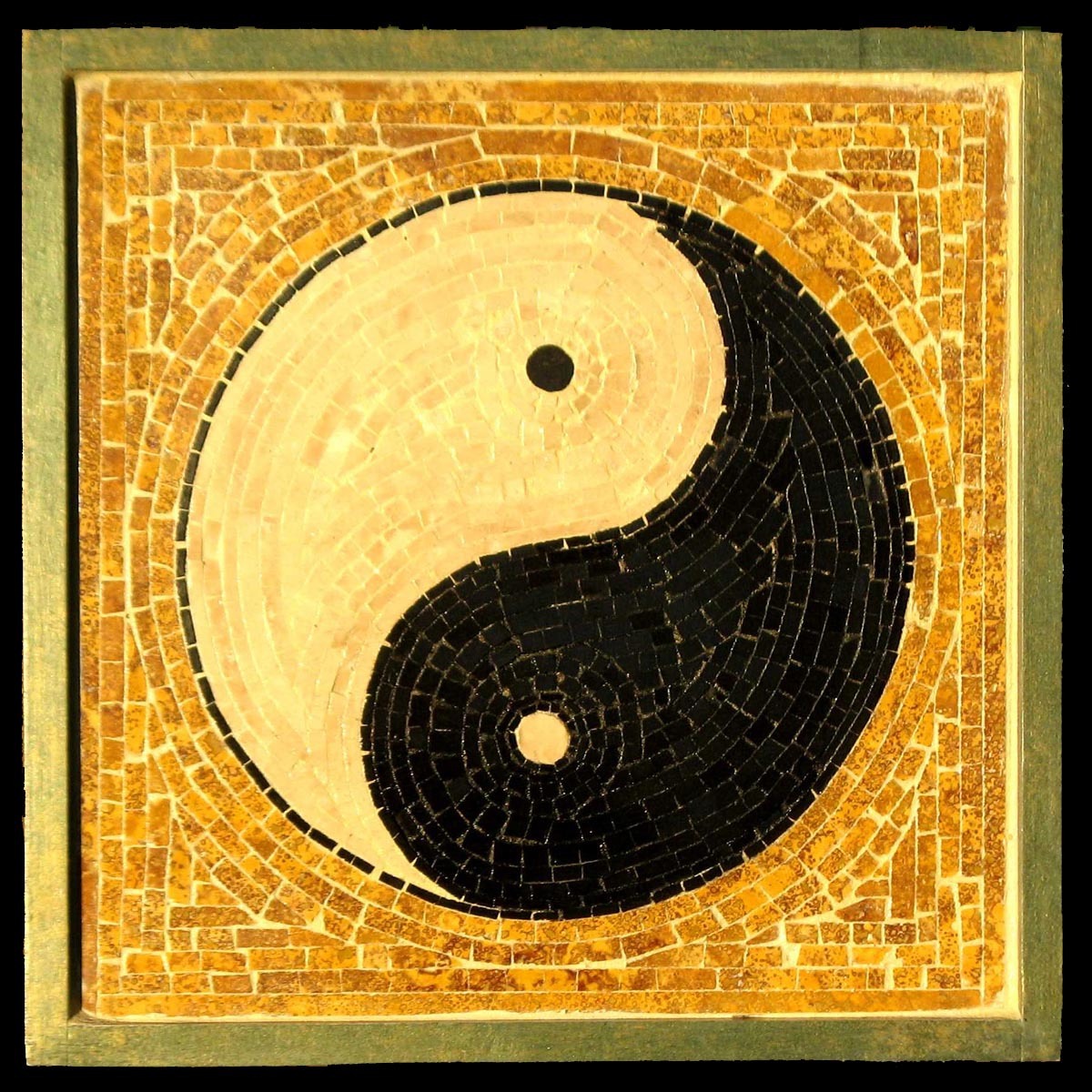
Le Symbole du Tai Chi : egalement connu sous le nom de Yin/Yang. Il illustre la theorie chinoise Taoiste du Yin et du Yang. Cette théorie est l’un des piliers de la Medecine traditionnelle chinoise. Elle est également appliquée dans de nombreuses formes de Tai Chi.


Tai Chi Chuan : Ce terme signifie « Boxe du Tai Chi ». Il s’agit d’un art martial. En pratique le Tai Chi utilise des mouvements similaires a ceux du Tai Chi Chuan, executes plus lentement. 


Le Tai Chi des 4 vents

Le Tai Chi que j’enseigne combine des pratiques de traditionnelles de Tai Chi, ainsi que d’autres pratiques respiratoires ou des exercices spécifiques plus du Chi Gong tels que le Yi Jin Jing. La plupart des formes que j’enseigne durant les premières années sont plus influencées par les arts martiaux traditionnels Japonais (Ju Jitsu et Karate) que par les pratiques chinoises.


                                                                                                                                                              et oui, Sayonara ! 


vendredi 22 août 2014

Henri Plée Hanshi


The Father of European Karate Henri Plée Hanshi left us on August 19, 2014.


Henri Plée Hanshi was one of the rare Westerners to hold the rank of 10th dan karate masters. 

Born in Arras, France on 24 May 1923, he started his martial career with French Savate, Ju Jutsu, and Fencing. His studies were interrupted by World War II in 1940.

After the war, he learned Judo in Paris under Mikonosuke Kawaishi. He was the 96th French black belt and is now ranked 5th dan at Judo.

In 1946, he returned to French Savate, also known as French kickboxing, and trained and sparred with some of the best French fighters such as Rigal, Pierre Plasait, Cayron, and Pierre Baruzy. Despite quality of this training he was still feeling the need to go stronger and deeper, and was looking for something else.

In 1953, he discovered aikido, karate and kobudo with Minoru Mochizuki. This was the start of his karate career.

Minoru Mochizuki Hanshi


In 1955 he founded his dojo where he taught the four pillars of Japanese Martial Arts : Karate, Judo, Aikido, and Kendo. Henri Plée Hanshi instructed many black belts who, at a later stage, became the foundation of the European karate institutions, and are today some of the highest ranking karate masters in Europe. 


From 200 karate practitioners in 1961, Henry Plée's efforts have led today to more than 200,000 practitioners in France. The French government considers him as one of the greatest international experts in Martial Arts, and knighted him with the French Ordre national du Mérite in 2008.

Ranks

Karate

Judo

  • 5th dan, Judo.

Aikido

Kendo

  • 1st dan, Kendo, by Minoru Mochizuki.

Bōjutsu

  • 1st dan, Bo-Jutsu, by Minoru Mochizuki.
  •  
Henri Plée Hanshi 1923 - 2014.   


vendredi 29 mars 2013

Mutual Progress


Let's help each other progress toward improving Mankind.

No matter the schools - ryu and methods, practitioners together form a great family.

In the past, Martial Arts were used on battle fields for warfare and to train samurai warriors.

Nowadays, Martial Arts are still used to train samurai, but only those who fight for peace. 

The goal of Martial arts is now to cultivate peace.

Hiroo Mochizuki - Soke, Yoseikan Budo


Hiroo Mochizuki lives in Aix en Provence, France. He is the son of Minoru Mochizuki, founder of Yoseikan Budo, who had trained directly under Jigoro Kano, Gichin Funakoshi and Morihei Ueshiba, the founders of modern Judo, Karate and Aikido. 


After World War II, the emphasis in the teaching of Martial Arts switched from practical warfare applications to one of moral improvement of the student. This had always been the goal of Jigoro Kano when he designed Judo based on traditional Ju Jitsu tradition, but had been lost when the military clique had militarized Japan after World War I.

Martial Arts are a wonderful way to train better people. It is important however, to not lose sight of the fact that they should always be a martial discipline, and stay realistic. Unfortunately, it is not always the case... If you are serious about your practice, you should always question what you are doing, try to make sure it works by asking practitioners better than you to attack you, and see what happens...

The original quote in French :

Aidons-nous à progresser mutuellement pour améliorer l’humanité. 
Quelles que soient les écoles et les méthodes, les pratiquants forment ensemble une grande famille.
Auparavant, les arts martiaux servaient sur les champs de bataille à faire la guerre et à former des Samouraïs.
Aujourd'hui les arts martiaux forment toujours des Samouraïs, mais ceux représentant la Paix. Les arts martiaux servent à cultiver la paix.


mercredi 17 août 2011

Compassion happens


“Compassion arises by entering into the subjectivity of others, by sharing their interiority in a deep and total way.” (Bhikkhu Bodhi).


After 30 to 35 minutes of Zazen, a stabbing pain arises between my shoulder blades, slightly to the left. It burns, it stabs, it nags... I can adjust my position and find some relief to it, but I know it's here, ready to strike !

Once upon a time, I was driving on a small road of Provence. It was a rainy stormy night of  1981. The road was slippery. The car skidded, I tried to catch up, it skidded the other way... And I flipped my Dad's convertible into a 25' deep ditch.

My head crushed under the windscreen frame, I knew I was bleeding, and realized I was going to die there if I didn't try do something about it. After quite a struggle, I was able to collect my legs underneath my chest. I lifted the car just enough to release my head from the wreck. (I was practicing Aikido one hour before the accident, and all my muscles and joints were warm and stretched)

I pushed the door open. I got out from under the car and climbed back to the road. Some people stopped and took me to a doctor. And from there to a hospital. Literally covered with blood I walked to the ER - I distinctly remember a cat sitting on the operation table...


They shooed him away. I climbed on the table and within 30 seconds was paralyzed from head to toe.

Not a good feeling...

The doctor had to stitch my scalp back together. Because of the concussion, she could not put me to sleep. This was painful... You can deal with 2 or 3 stitches, but 30 or 40 of them, added to the fear of paralysis... I could not even punch the Doctor in the nose: I was paralyzed !

A nurse gently grabbed my hand. She said nothing, she just held my hand. I could not squeeze hers, but I could feel it. The release was amazing and instantaneous. She did not move, she did not speak, she was just here with me, sharing physically and in person.

Compassion.

I was young, I recovered quickly. Minor damages. One dorsal vertebra slightly crushed. I would feel it when I'd get older said the good looking Doctor...

So now, when I sit and feel the pain, I know where it comes from, and remember Compassion.

Compassion is often confused with benevolence, generosity, altruism or self-sacrifice. But Compassion hardly can be defined with words. I can tell you what it's not, but I can't tell you what it is.

You don't decide to be compassionate, Compassion happens. When it happens, you don't know it, and once you realized it happened, well, it's not happening anymore ...


Don't be excited or fooled by big words, big deeds, big acts. In Compassion two sentient beings become one, and experience together. There is no need or room for words, thinking, or feeling. 

Compassion happens.


samedi 16 janvier 2010

More Happo Giri Videos

Here are 2 more videos about Happo Giri - the 8 directions cuts of Kenjutsu. Apparently there are other training exercises named Happo Giri by other martial arts schools. Actually, Aikido seems to have one that in fact uses the same Kirioroshi cut (Vertical to the head) in 8 directions around the swordsman.  This Happo Giri is the one Long Sensei taught us in Pensacola in 2008, it is also an excellent warming-up exercise.


This one is a front view of the kata performed by Cody - I thought he was too close to me when taping it, but it turned out pretty cool !


This one is of myself, it is far from perfect : I wish I would better aim my kissaki to the front at the end of the DO cuts; and my arms need to be more relaxed when I go back to Seigan.


The goal of these videos is not to demonstrate perfect moves, but to show potential students what they could practice in our dojo. If we'd wait until we are perfect to post something, we would never do it !

They are also a very good way to help us realize our imperfections, which should (hopefully) help us improve our practice...

dimanche 24 mai 2009

Pensacola Iai Class

Great class in Pensacola yesterday at the Big Green Drum Dojo


We went through :
Seiza Mae
Tsukikage
Junto Sono Ni
Shihoto
Zentekigyakuto Sono Ni
Moniri
Tsubamegaeshi

Moniri and Tsubamegaeshi were (almost) new waza for us as we had only studied them once with Long Sensei earlier during one of his seminars.

Classes like these are very profitable as we can quietly get into details of waza we have practiced times and times, with possible mistakes (we had for example practiced the wrong Chiburi on Tsukikage for the last 3 months...).

It also answered some of the questions we had, for which I did not know the answers...

I will e-mail my notes to everyone in a separate e-mails

Thank you Patty Sensei for your help and patience.