Affichage des articles dont le libellé est Qi Gong. Afficher tous les articles

mardi 20 décembre 2022

Tai Chi et Chi Gong

Ces deux disciplines ont leur origine en Chine.
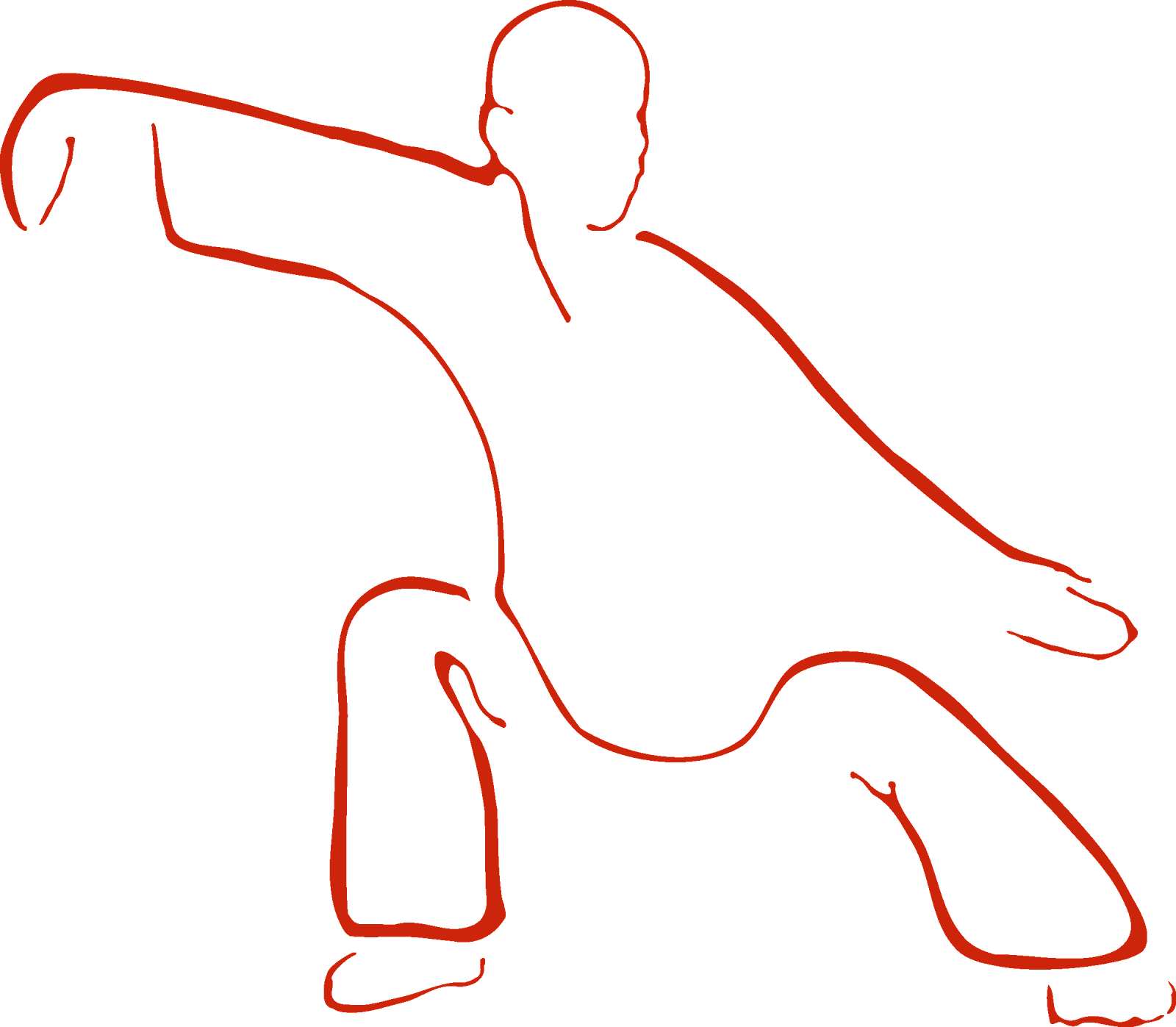


CHI, TAI et GONG


CHI ou QI

Chi et Qi sont deux manieres differentes d’ecrire le terme que l’on traduit generalement par le terme “Energie” en francais. 


TAI

Le terme « Tai » signifie « Grand » on le retrouve dans le terme Typhon (Taifoon) : ouragan.


GONG ou KUNG

Le Terme “Gong” de Chi Gong est parfois transcrit “Kung” comme dans “Kung fu”. On peut le traduire en français par « Pratique », « Exercice » ou « Technique ».


TAI CHI

Tai Chi peut donc se traduire comme « Grande Energie »

Le Tai Chi utilise des mouvements amples et lents pour tonifier l'énergie interne et la faire circuler efficacement dans tout le corps. Généralement, ces mouvements sont des mouvements d’arts martiaux.


CHI GONG

Chi Gong, (également ecrit Qi Gong, Chi Kung, Qi Kung) peut se traduire en francais par « exercice énergétique » ou « techniques énergétiques ». C’est un ensemble de pratiques qui consistent a tonifier et a faire circuler l'énergie interne du corps. Ces pratiques incluent des

enchainements de mouvements, des étirements, des exercices respiratoires.

On pourrait a l’extreme considérer tout exercice pratiqué dans le but d'améliorer métabolisme et santé comme un Chi Gong.

En pratique, le terme Chi Gong est réservé a des pratiques basées sur les théories de la médecine traditionnelle chinoise.


Le Tai Chi est donc une forme de Chi Gong

Tai Chi et Chi Gong ont le même but : harmoniser notre métabolisme pour optimiser la création d'énergie (a partir des aliments que nous mangeons et de l’air que nous respirons) et améliorer la circulation ce cette énergie dans le corps.

Cependant, le Tai Chi se limite a utiliser des mouvements d’Arts Martiaux, sans utiliser d’autres techniques développées par le Chi Gong.


NOTES :

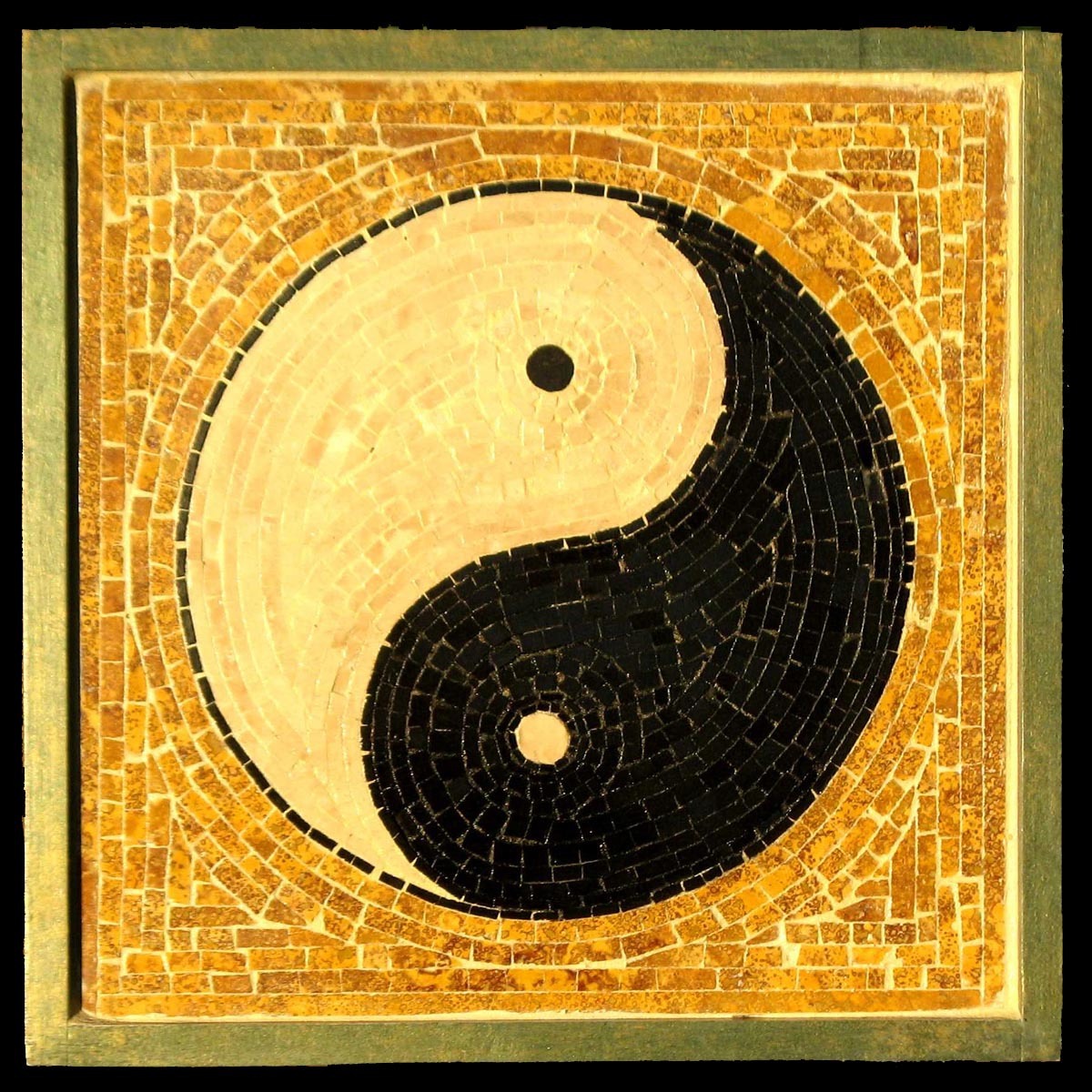
Le Symbole du Tai Chi : egalement connu sous le nom de Yin/Yang. Il illustre la theorie chinoise Taoiste du Yin et du Yang. Cette théorie est l’un des piliers de la Medecine traditionnelle chinoise. Elle est également appliquée dans de nombreuses formes de Tai Chi.


Tai Chi Chuan : Ce terme signifie « Boxe du Tai Chi ». Il s’agit d’un art martial. En pratique le Tai Chi utilise des mouvements similaires a ceux du Tai Chi Chuan, executes plus lentement. 


Le Tai Chi des 4 vents

Le Tai Chi que j’enseigne combine des pratiques de traditionnelles de Tai Chi, ainsi que d’autres pratiques respiratoires ou des exercices spécifiques plus du Chi Gong tels que le Yi Jin Jing. La plupart des formes que j’enseigne durant les premières années sont plus influencées par les arts martiaux traditionnels Japonais (Ju Jitsu et Karate) que par les pratiques chinoises.


                                                                                                                                                              et oui, Sayonara ! 


dimanche 7 octobre 2018

Tai Chi videos : First 3 forms of Four Winds Tai Chi


Vanished Tai Chi videos !

I realized 2 weeks ago that my Tai Chi videos had disappeared from the Youtube Mokurai Dojo channel.
I had shot some of them 15 years ago, when I did not have the ability to edit them properly and decided to start doing just that.

Modernized versions

During the next 2 months, I will be editing and uploading new versions of these Tai chi videos. They will be available on my Mokurai Dojo channel.

The 4 first forms of 4 Winds Tai Chi

4 Winds Tai Chi includes 8 Tai Chi forms and sets of Qi Gong and Breathing exercises from different traditions.

The first or short form includes 10 moves, counted from 1 to 10. Moves 1, 3, 5, 7 and 9 are performed with the left foot forward. Moves 2, 4, 6, 8 and 10 are mirror images of the previous ones.

The next 3 forms of Four Winds Tai Chi are built on the same structure as the short form, they include the same 10 moves, in the same order, and additional moves in between.

In this video from 2003 I demonstrate the 1st, 2nd and 3rd forms.


I will post additional videos of each individual forms, performed solo and in a group.


mardi 10 avril 2012

Modern Taoist and Zen Practices


When Buddhism arrived in China, Taoism had been established there for a long time, with a tradition of spiritual practices somehow similar to the yogic meditative practices of India. The similarities between the 2 great traditions helped the spread of Buddhism in China. It was also the reason why Taoism greatly influenced the practices of Buddhism in general, and of Chan (that branch of Buddhism mostly interested in sitting meditation) in particular.


A clear example of this influence is to be found in the healing techniques  (So Cream method) described by 17th century Japanese Zen Master Hakuin in his Yasenkana. What Hakuin used to heal himself from what he called « Meditation disease » are classical Qi Gong techniques.


Unfortunately the influence of Taoism in Japanese Zen slowly decreased. There might be several reasons for this.


  • Taoism was usually not interested in being spread to the general population, so its higher teachings are usually recorded in very esoteric language that only initiates can understand.
  • Although there are clearly very valuable practices in Taoism, there are also lots of magical and superstitious practices detrimental to Meditation practices.
  • It may not have been easy to find qualified teachers.


This is unfortunate for us, who mostly have learned Zen through the Japanese influence, for some techniques developed by Taoists are very valuable to Zen practice.

Techniques that request the total participation of our bodies to harness the mind.

Even if harnessing the mind is not the goal, but a tool of Zen practice, it is an important one. The ability to quiet the mind – to harness the Monkey - can bring lots of relief to people who need that before they can concentrate on anything else. After all, most of us came to Zen because of a suffering induced by our inability to control our wandering mind.


Today, I see a strong intellectual current in Zen, people want to understand everything, they read complicated books about everything, and do not spend enough time practicing. I am not sure this is going in the right direction. There are limits to what can be achieved through intellectual understanding. Intellectual, analytical understanding uses systems of words and ideas to explain them. These ideas or words are just symbols, they point to the moon, they are not the moon, but we tend to believe they are the real thing, and we get lost. We are like some food critic who know everything about French cheeses, who could not taste the difference between a Camembert and a Roquefort. There is a time where you need to quit asking questions about this or that, and start doing it. Taoist techniques are here for that.


Most of Taoist practices are related to Qi Gong – a term that can be translated as «Exercises in Energy or Vital Force). Tai Chi – practiced for health purposes – is a Qi Gong. Our Karate Sanchin Kata is also a Qi Gong.


Taoists have developed coherent theories and terminologies to guide the practitioner and describe what is happening during practice. Some of these theories use are highly esoteric and possibly misleading. Fortunately, some of them are easier to use, and their understanding makes practice easier. So they are a good tool to achieve a goal. It does not mean that they are «true». They simply are a description of reality. Once again, the Map is not the Territory, but it can be useful to deal with it.


Note: The practice of the "So Cream" or "Soft Butter" described by Master Hakuin in Yasenkana is inspired from the basic Small Circulation practice of Taoist Yoga.

vendredi 2 mars 2012

The Eight Main Psychic Channels


The 8 Main Psychic Channels - or Vessels - are important to know, because they are much easier to visualize than the 26 channels or Meridians of traditional acupuncture.

Basically, there are : 

  • 3 channels on the Torso : One vertical in the Back, one vertical in the Front, one horizontal around the waist; 
  • one vertical channel inside the Torso, 
  • one channel on the outside, and one on the inside of each Limb. 

This is quite easy to remember.

  • Tu Mo follows the middle line of the back.
  • Jen Mo follows the middle line of the front.
  • Tai Mo is a circle at the waist.
  • Chung Mo raises inside the body from the perineum up to the Heart.
  • Yang Yao runs along the outside of the arms.
  • Yin Yao runs along the Inside of the arm.
  • Yang Chiao runs along the outside of the leg.
  • Yin Chiao runs on the inside of the leg


    MIDDLE LINE OF THE BODY 
     
Du Mo - Governor Vessel
Ren Mo - Conception Vessel


Knowledge of these 2 Tu Mo and Jen Mo vessels can be very profitable to the actual PRACTICE of  Zen and Budo to help improve health and ability to focus. We will in later posts describe a few exercises to this effect. In Karate, Sanchin Kata should be performed while keeping in mind the path of these Governor and Conception vessels. 


THE UNIQUE BELT AND THRUSTING VESSELS

Tai Mo - Belt Vessel

 
Chong Mo - Thrusting Vessel

These 2 Belt and Thrusting vessels are not often mentioned in Classical Acupuncture (I know, if you are a genuine acupuncturist, you won't agree. Sorry,  this is not a blog about acupuncture...) 


THE ARMS VESSELS

Yang Yao - Yang Arm Vessel - runs along the outside of the Arm.


Yin Yao - Yin Arm Vessel, runs on the inside of the Arm.


THE LEGS VESSELS


Yang Chiao - Yang Leg Vessel - runs along the outside of the Leg.


Yin Chao -  Yin Leg Vessel - rus on the inside of the leg


These 6 vessels are important to memorize. We will use them for various exercises.


The following Notes are for Acupuncture Nerds

Note 1 : Correlation with the 12 organs Meridians :

Basically, for those of you familiar with traditional Chinese Acupuncture, the 2 new things are the Belt (Tai Mo) and Thrust (Chung Mo) Channels. You already are familiar with the Governor and Conception Channels, and the Positive and Negative Arm and Leg Vessels are a “compilation” of the Yang and Yin Meridians of the Arm and Legs. Yang Yao : Large and Small Intestines, Triple heater meridians; Yin Yao : Heart, Lungs and Pericadium meridians; Yang Chiao : Stomach, Gall Bladder and Urinary Bladder meridians; Yin Chiao : Kidneys, Liver and Spleen meridians.

Note 2 : Detailed description of the 8 Psychic Channels :

  1. the Tu Mo or Governor channel rises from the perineum (between the genitals and anus) and passes through the coccyx up the backbone to the brain;
  2. the Jen Mo or Conception channel rises from the perineum and goes up along the belly, passes through the navel, the pit of the stomach, the chest and throat before going up to the brain;
  3. the Tai Mo or belt channel from both sides of the navel forms a belt which circles the belly;
  4. the Ch'ung Mo or thrusting channel rises from the perineum, goes up between the tu mo and jen mo channels and ends in the heart;
  5. the Yang Yao or positive arm channels in the outer sides of both arms link both shoulders with the centres of the palms after passing through the middle fingers;
  6. the Yin Yao or negative arm channels in the inner sides of both arms link the centres of the palms with the chest;
  7. the Yang Chiao or positive leg channels rise from the centres of the soles and turn along the outer sides of the ankles and legs before reaching the perineum where they connect with other channels; and
  8. the Yin Chiao or negative leg channels rise from the centres of the soles and turn along the inner sides of the ankles and legs before reaching the perineum where they connect with other channels.

Note 3 : Terminology :

The names of these channels vary a lot, I suppose depending upon different ways to translate Chinese. This is not that important for our purpose. What matters to us is to be able to visualize the path of these channels.

Tu Mo is also known as Du Mo or Du Mai, Control Channel or Governor Channel.
Jen Mo is also known as Ren Mo or Ren Mai, Function or Conception Channel.
Tai Mo is also known as Dai Mo, Belt or Girdle Channel.
Chung Mo is also known as Chong Mo, Chang Mo, Chong Mai, Thrusting or  Penetrating vessel
Yang Yao is also known as Yang Wei Mo, or Positive Arm Channel.
Yin Yao is also known as Yin Wei Mo or Negative Arm Channel.
Yang Chiao is also known as Yang Jiao Mo, Yang Qiao Mo, or Positive Leg Channel.
Yin Chiao is also known as Yin Jiao Mo, Yin Jiao Mo or Negative Leg Channel.


mardi 28 juin 2011

Moderation in training


I am a firm believer in hard and serious training. I am also a believer in common sense. There seems to be a tendency in certain young people to train extremely hard to the point of ruining their health by negating the needs of their bodies. Although this seems to be more true for Japanese people, it is true of all ascetic practice. Even the historic Buddha experienced this denial of one's earthly nature and almost starved himself to death. The Chinese, possibly because of the influence of Taoism, seem to be less prone to this kind of exaggerations.

Toru Shirai was born in Edo in 1783. He was a renown Kenshi. He had opened a dojo at the age of 28 and taught around 300 students. But he worried about his own kendo. In the fencing world at the time, there were many fine kenshi. After the age of 40, however, they often became weaker or slower and became a mere shadow of their former selves. Not wanting this to happen to him , Shirai left his dojo and his 300 students, went back to his hometown of Edo (presently Tokyo), and sought out his Itto-ryu sempai Terada Goroemon.

Terada was also a Zen priest and Shirai practiced zazen under him. He also underwent Terada’s severe training methods. This included the practice of cold-water ablutions.

Okunojo Yoshida, a later student of Shirai, writes:
Shirai Sensei abstained from liquor and meat, and poured a hundred, two hundred, even three hundred pails of water over himself a day. He dipped his pail so often that the water in the well he used would become stirred up and muddy, so he would go to the Sumida River to continue. He repeated this day after day for years—in the morning in the hottest weather, at dawn in the depths of winter, and even at inns during journeys to Bishu, Kyoto, and Setsu. On two occasions he fasted and performed his ablutions for seven days—once at Mt. Yuga in Biyo and once again at his home.”

Unfortunately, Shirai’s extraordinary dedication to Terada's ablution method did little or nothing for him. Actually it ruined his health and Shirai finally broke down.

Shirai writes in Heiho Michishirube, “My efforts were fruitless. Worse, they put me in such ill health that neither acupuncture nor medicines had any effect. Eventually my mother and other close relatives begged me to ‘cease those baneful ablutions.’ Unable to bear my mother’s lamentations, I was finally convinced to give up the practice.”

Compare this with Master Hakuin's passage in Yasenkana :
... I began devoting myself single-mindedly to my practice, forsaking food and sleep altogether. Before the month was out... I became abnormally weak and timid, shrinking and fearful in whatever I did. I felt totally drained, physically and mentally exhausted. Strange vision appeared to me during waking and sleeping hours alike. My armpits were always wet with perspiration. My eyes were watered constantly. I traveled far and wide, visiting wise Zen teachers, seeking out noted physicians. But none of the remedies they offered brought any relief.

Hakuin himself had fallen gravely hill from "meditation disease". No doctor was able to help him. In despair Hakuin had gone on a quest for a cure and had finally met Master Hakuyu, a mountain hermit, who had taught him an abdominal breathing Qi Gong that would finally cure him.

Giving up the ablution practice, Shirai began practicing Rentan no Ho: the same style of abdominal breathing practice described by Zen priest Hakuin in his work Yasenkanna. Not only did it restore his health, it also instilled in him the self-awareness and ability to take the first steps toward the establishment of his Tenshin Shirai-ryu.

In Heiho Michishirube, Shirai describes his cure. 
“At the age of thirty-three, on January 18, 1815, I abandoned cold-water ablutions once and for all and adopted the abdominal training method. I had previously read a number of the posthumous works of Hakuin and I had heard from my teacher Terada about the effectiveness of rentan no ho, but I had neglected it in favor of the more arduous practice of ablutions. Now I practice rentan no ho exclusively. I have rallied my spirit and, as Hakuin did, integrated rentan no ho into every part of my life and ways—into my prayers to Buddha, into my studies, into my swordsmanship. Within two short months of such practice I felt my health return as energy flowed into me and filled my abdomen (seika.) My illness has melted away and I feel myself as bouncy as a brand-new ball.”

What Shirai gained from his practice of Rentan no Ho allowed him to take some distance from the treachings of his teacher Terada and develop his own style Tenshin Heiho. In Heiho Michishirube Shirai writes : “the exclusive practice of Rentan no Ho advocated by Hakuin is quick and effective, while the method of ablution has little effect.”

Shirai had become utterly disgusted with cold-water ablutions as a means to enlightenment and it seems that in his later years he even told his pupils that “dousing oneself with cold water and fasting are poor ways to achieve Tenshin (understanding one’s own Buddha nature).”


Common Sense, the Middle way...


lundi 18 avril 2011

2011 World Tai Chi Day


Only TWO WEEKS LEFT until a new edition of this historic event ...

This year, on
Saturday, April 30th,

WORLD TAI CHI DAY
 
will be celebrated at the Dothan Area Botanical Garden

On that particular day, at 10.00 AM local time, Tai Chi and Qi Gong Practitioners from all over the World, from Tokyo to Paris and Atlanta are going to practice. Here in the Wiregrass, we will  meet on the beautiful lawns of the Botanical Garden. 


Please join us for this Free event with your whole family - no special  clothing required - T-shirt and short or jogging pants. 
 
Take this opportunity to visit our gorgeous Botanical Garden, the Herbs and Rose gardens,  The KOI pond with its beautiful Japanese bridge. And stay for a picnic right after the event...


This year we will practice gentle stretching and balance enhancing moves from the Yi Jin Jing, a set of exercise developed in 6th century China by Zen Master Bodhidharma. 

When the First Patriarch came from India to China to teach Zen, he settled at the Shaolin Monastery. According to the Legend, as he found that the monks there were not in very good physical shape, he taught them special Yoga moves that would enhance their Health. He specifically taught 2 exercises Yi Jin Jing, and Xi Sui Jing.

This year, we will practice together the moves of Yi Jin Jing.


For those willing to be BETTER PREPARED for this world event, 1 Free Seminar will be offered on Thursday, April 28th at 6 PM at Westgate Park.


World Tai chi Day is sponsored locally by Frédéric Lecut’s School of Martial Arts and the City of Dothan Department of Leisure Services..

For more information about the whole worldwide event, please visit the remarkable website of the World Tai Chi and Qi Gong Day Organization (www.worldtaichiday.org)


For more information about the local event,  please contact
Frédéric Lecut (334) 798 1639 – frederic.lecut@gmail.com

Larry PATRICK (334) 615 3712 – lcpatrick@dothan.org


dimanche 20 février 2011

Tai Chi to lose weight and ease depression


The University of Queensland, Australia has released an interesting study for anyone looking to lose weight.  Researchers found that the gentle, yet powerful, exercise known as Tai chi helps with obesity and excess weight, in a number of ways.  The Australian scientists discovered that tai chi:
  • Improves body mass index (BMI);
  • Reduces the amount of abdominal fat and overall waist measurements;
  • Improves blood sugar balance–a critical element for maintaining a healthy weight or to lose weight;
  • Reduces high blood pressure;
  • Significantly reduces depression; and
  • Improves the body’s use of insulin (insulin resistance)–a significant factor for weight gain and diabetes, among other serious health conditions.
Tai chi  is a Chinese internal martial arts often practiced to improve health. It is designed to facilitate the flow of fluids and Qi (life force) in the body, promoting good health and vitality. Tai Chi generally utilizes martial arts movements.

Tai Chi is suitable for most people, including those suffering from injuries and illness.

mercredi 29 décembre 2010

Tai Chi, Balance & Proprioception


Proprioception is a combination of senses that informs the central nervous system about where the various parts of the body are located and moving in relation to each other (Kinesthesia) and in relation to our environment, and that helps us keep our balance. Proprioception is what allows us to to walk in complete darkness without losing our balance. The main organs involved in proprioception are the inner ear, the eyes (sight), skin (sense of touch), and the stretch sensors located within muscles, tendons and joints.

With proprioception, you can estimate the position of your foot on the ground, the angle of your calf with it, and the amount of weight spread between the ball and the back of your foot.

Proprioception continuously gathers input from millions of sensors in your muscles, joints, and ligaments, combines that with input from sight and touch and uses it all to control your balance, coordination, posture, and movement.

Kinesthesia is the part of proprioception that is mostly interested in the localization of the body parts in relation to each other. The sense of equilibrium or balance involved in proprioception is usually excluded from Kinesthesia. An inner ear infection might degrade your sense of balance, which would degrade proprioception, but not kinesthesia. You would be able to walk by using your sense of sight to maintain your balance but would be unable to walk with your eyes closed.


2 simple exercises to illustrate the influence of the senses of sight and touch on proprioception. Try them.


Influence of Sight on balance.
Stand on both legs. Raise on foot at about knee level. Keep your balance for 10 seconds (count until 10). If you cannot hold it for 10 seconds, try to count how long you can hold it. Put your foot back on the ground.

Now close your eyes and repeat the same exercise. Unless you have already trained for it, you will find it much more difficult to hold on your balance with your eyes closed.


Influence of Touch on Kinesthesia.
Stand on both legs with your feet together. Step up to the front and right with your right foot. Land your right foot at 45 degrees to your front right. Slightly bend both knees. Very slowly, lift your right foot from the ground and bring it back toward your left foot and then to your right back. Land your right foot at 45 degrees to your right back. DO NOT touch the ground while doing so. Pay attention to how easy this move is for you.

Now repeat the same exercise but when you move your foot back, let your big toe gently slide on the ground. It should become much easier this way.

The reason why it is easier with your foot slightly dragging on the floor is that your sense of touch provides information to your central nervous system about where your foot is located. When your foot stays off the ground, the only organs that inform your brain are the sensors within muscles and joints. Once the foot slightly touches the ground, then the sense of touch provides an additional information, which makes things much easier. This information about the position of the foot is of course also helpful to help us keep our balance


Training can improve proprioception.


The ability to play piano or wield a sword requires a finely-tuned sense of the position of the joints. This sense can and needs to be trained to enable a person to concentrate on other aspects of the performance such as reading the music or seeing where the other opponents are.
 

Because of the low speed and stretching moves involved in their practice, Chi Gong in general and Tai Chi in particular are excellent ways to enhance proprioception for adults.

In future posts I will propose simple exercises to train and enhance proprioception.


mercredi 20 octobre 2010

Naikan Tanden Seminar

On last Saturday October 16, I held our first seminar in our new Headland Dojo. The theme was Naikan Tanden.

I borrowed this term from Zen Master Hakuin, (1685–1768) who possibly borrowed it from older sources. One relatively accurate translation of it would be "Introspective Meditation at the Tanden"...


To tell a long story short we practiced a number of Qi Gong exercises centered on the Tanden, an area located slightly below the navel; and others designed to move energy around the body - limited to 3 points on the center line of the body (also known as Conception Vessel in Traditional Chinese Medicine). 

All these exercises were practiced using regular abdominal breathing.

In addition, we also practiced the mighty Reverse Abdominal Breathing.

Between each Qi Gong exercises we practiced Zazen (sitting meditation)for 10 minutes. 

The whole session lasted about 2 hours  after which we had a tea and a little discussion to evaluate the program and exercises.  This was not an easy class. I introduced lots of different and at times confusing exercises to my students. The Reverse abdominal Breathing is obviously not an easy thing to get into. 

I am very thankful for my students' input, their help and their patience.

From this first session I intend to build up more simple programs adapted to various audiences with different needs. (More later). 
In future articles I'll provide details about reverse abdominal breathing, as well as energy circulation in the body, and the importance of these practices for meditation and martial arts.