samedi 25 mars 2017

3 Yoshukai Kata


Here are the official counts for Yoshukai Karate Mugen, Sanchiryu and Kusanku kata, demonstrated on March 18, 2017 at a Yoshukai Karate Instructors seminar in Dothan, AL.


 Mugen - open hand, by Mr Tony Adams


Sanchiryu by Mr Dennis Trawick


Kusanku by Mr Josh McCullars


Practice...

jeudi 2 mars 2017

Definition


When people speak and argue for hours it is often because they do not have a clear and common understanding of what they are talking about.

This at times happens in Buddhism. (Believe me, I was there...)

Clear definitions allow everybody to  be on the same page when discussing or reading about an issue.


Tibetan Buddhism defines mind as what distinguishes sentient beings from rocks or trees or bodies of water. Mind is that which grasps - or rejects - something external. It is characterized by a discriminating awareness or a sense of duality.


 "What is the mind? It is a phenomenon that is not body, not substantial, has no form, no shape, no color, but, like a mirror, can clearly reflect objects."

Lama Zopa Rinpoche

dimanche 12 février 2017

RIP Katsuoh Yamamoto, 1938 - 2017


It is with much sadness that we share the  information  that Soke Katsuoh Yamamoto, founder of Yoshukai Karate passed away on February 12, 2017 in Japan.  Born on July 10, 1938, Soke was 78 years old. His long and courageous battle with cancer finally came to a peaceful end.


  Image may contain: 1 person, beard


One of the last masters who learned from the pioneers who brought Karate from Okinawa to mainland Japan, Soke Yamamoto acquired and honed his skills under Sensei Tsuyoshi Chitose, founder of Chito Ryu Karate, before founding Yoshukai Karate in 1963. 

He touched many lives and inspired many people with his bravery and strength of mind, keeping with this legacy through his last and most difficult battle against cancer. We will now carry on his legacy with pride, not forgetting the many teachings and lessons we all gained from him.  


Over the course of the last 23 years I had the honor to meet and train under him many times. I will miss his courage, integrity and kindness.  


Osu!


dimanche 22 janvier 2017

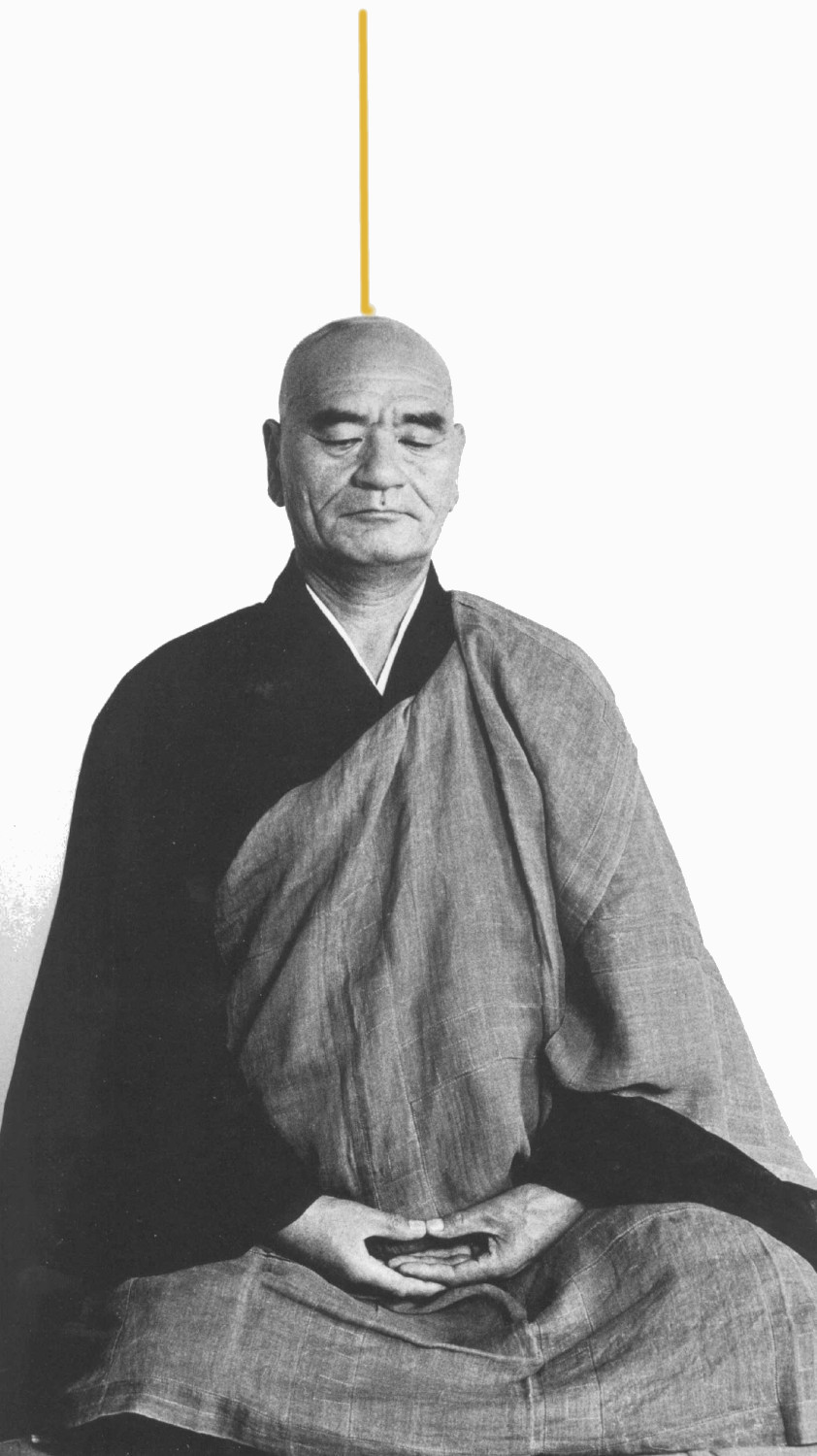
Posture

 
The least amount of leaning or twisting our torso tremendously decreases our stability. Keeping vertical and straight is extremely important no matter what we are doing, meditating, walking or fighting (from a standing position).

A common advice given to help us keep this proper posture is to imagine a golden thread glued to the crown of our head is pulling it upward.


Now it is a beautiful image, but it is not easy for everyone to imagine this kind of things. 


Last November, my Sword Master Carl Long Hanshi told us to make sure to always see our belly or chest in our peripheral vision when looking horizontally. 


I like this much better than the Golden Thread way, and it also works for Martial Arts as well as for Meditation. It is easier for most of us to see things than to imagine them. 

Positive secondary effect : Deeper breathing.

Additionally, while this should be part of our formal Zendo and Dojo practice, it can and therefore should also be practiced in everyday's life. 


This is primordial.


lundi 15 août 2016

Awareness


There is a subtle but important difference between being aware of a thought and thinking it.

When you are just aware of a thought it is not fully born, it is not there yet, and if you play it well, you don't have to let it take over !

Once a thought becomes fully conscious, it is much more present and becomes commending and compulsive. It will suck you in and grab control of your consciousness. 

In terms of dependent origination, your ego is born.

This difference is better experienced than said. But I will try 1 simile.

Imagine you are on a board surfing the crest of a wave. As long as you stay balanced on your board, you are simply aware of the strength of the wave. The wave and you are one.


But if you dont pay attention and fall off your board, all of a sudden you feel the strength of the ocean. 


Training is necessary to acquire the ability to be aware of thoughts without being taken over by them.

This applies, of course, to Zazen. Be aware of thoughts, emotions or other mental activities before they become powerful enough to drag you in, you can keep surfing the crest of the wave. 


Try it...


Dharma gates are boundless, I wow to enter them...


samedi 6 août 2016

Cross Training


Practice is not just about improving skill in one discipline.

Martial Arts, Zen and Mosaics are the 3 legs of the chair I sit on. If you remove one leg, the 2 remaining legs won't stabilize your ass. If you make one leg stronger, it increases the stability of the whole chair.

That's what Cross Training is about...


Don't get stuck anywhere,  learn in one place to be more efficient somewhere else, Dharma gates are boundless, enter them ! 


dimanche 5 juin 2016

3 reasons why you should not use a shinken.


In the past 16 month I have seen in 2 occasions some high ranking Karate people cut themselves with their swords. In Public. Fortunately, their cuts were superficial, no tendon or bone were cut. But the blood spilled in front of many people. 


This is unfortunate. Cutting yourself with your sword is akin to shooting yourself in the foot with your own gun. Would you trust a gun instructor who'd do that ?

Sharp swords – also called Live Blade or Shinken in Japanese – were designed to kill people swiftly and effortlessly. The only reason to use them is to practice Tameshigiri – actual cutting of targets. This is done in a particular environment, with strict safely guidelines.

They should not be used for Iaido which is normally practiced with Iaito. Iaito have the same geometry and shape than regular katana, they may be slightly lighter to prevent stress injury, and they are dull to avoid accident. They are designed for this purpose of safe practice.


If Japanese masters use them, so should you. 

For the following 3 reasons :


A dangerous fallacy.
I have heard many people say “I like to practice with a sharp sword, because it forces me to be more accurate.” Invariably, those people cut themselves. And it's just a matter of time before someone cuts someone else. So this is a fallacy, and a dangerous one.


A bad image of Yoshukai
Unless you know what you are doing, you will cut yourself, as long as it happens in private, it is your problem, but if it happens in public, you are displaying a poor image of Yoshukai in front of students or parents.


A serious liability
An other aspect of this is that when you bring to a room, a dojo or a beach a sharp sword and leave it unattended on the ground, you are in effect letting a dangerous weapon in the open for anyone to mess with. Would you leave a loaded gun laying on an open table in a picnic area ?
People, and children in particular, are curious and can be sneaky. If anyone would grab your sword and accidentally cut themselves, or wound or kill someone, you would likely be liable, as would probably be whoever organized the event or own the venue where it happened.


So if you don't have a sword, please purchase a Iaito, there are some good ones available at Cheness. If you already have a sharp sword, dull it. Use a grinder and take the sharp edge out of it or ask someone to do it for you. If you want to keep your sharp sword purchase a Iaito.


If you have questions about sword purchasing, please contact me at Frederic.lecut@gmail.com